$50/mo in tea & supplements?
Grow your own medicinal herbs, and learn to make teas, tinctures, and salves at home.
Preparations
How to turn what you grow into teas, tinctures, salves and more. Each guide walks through one method, start to finish.
- Elderberry Syrup Recipe (and How to Make Any Herbal Syrup) Elderberry syrup recipe from University of Maine Extension, compared with Illinois and Oregon State. Cook the berries; don't can this recipe.
- How to Dry Herbs: Air Drying, Dehydrator, and Oven Methods Air-dry sturdy herbs in small bundles; tender leaves usually take 5–10 days (Oregon State). A dehydrator at 95–115°F takes 1–4 hours. Dry when leaves crumble.
- How to Make an Herbal Compress A compress is a cloth soaked in strong herbal tea: 3–4 tablespoons dried herb per cup of water, steeped 15–30 minutes for soft herbs, then used warm or cool.
- How to Make an Herbal Decoction Simmer covered, starting from cold water at 1 tablespoon dried herb per cup: 10–15 minutes for most roots and bark, 20–30 for tough roots, 15–20 for seeds.
- How to Make an Oxymel (Plus a Fire Cider Recipe) Make an herbal oxymel from vinegar and honey, plus a fire cider recipe with steps from University of Minnesota Extension.
- How to Make Cold Herbal Infusions Cold infusions steep 4–6 hours for delicate leaves and flowers, 8–12 hours in the fridge for roots and bark, 6–12 for mucilaginous herbs like marshmallow root.
- How to Make Herbal Creams & Lotions Melt herb-infused oil, beeswax and butter, blend in warm herbal tea with a stick blender, and add extras below 110°F. Keeps 1–2 weeks refrigerated, unpreserved.
- How to Make Herbal Infusions (Herbal Teas) Use about 1 tablespoon dried herb (2–4 tablespoons fresh) per cup of hot water, cover, and steep about 10 minutes; longer for a stronger tea.
- How to Make Herbal Liniments A liniment is an herbal extract steeped in alcohol or vinegar, rubbed on skin and never swallowed. We suggest 80–100 proof vodka or apple cider vinegar.
- How to Make Herbal Salves and Balms Salve is infused oil set with beeswax, by weight; a maker's rule of thumb is 1:5 wax to oil (soft), 1:4 firmer, up to 1:3 firm balm. Dried herbs only.
- How to Make Herbal Tinctures Fill a jar halfway with dried herb, cover with vodka or brandy (we suggest 80–100 proof); shake daily, 4–6 weeks. Dried-herb glycerite: 3 glycerin to 1 water.
- How to Make Herbal Vinegars at Home Per pint of vinegar, use 3–4 fresh sprigs or 3 tablespoons dried herbs. Heat the vinegar to 190–195°F, pour it over, and steep 3–4 weeks (Clemson).
- How to Make Herbal-Infused Oils For skin oils, our advice: fully dried herbs only. Steep them for weeks at room temperature, or hours in a water bath under 140°F. Oils you eat need more care.
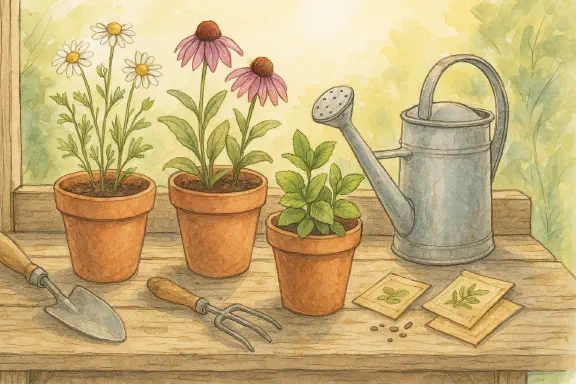
The Plants
Discover how to grow and harvest many varieties of medicinal plant in your own backyard or windowsill garden. Each guide walks you through planting, tending, and harvesting specific herbs, with clear instructions for beginners and practical tips for small spaces. Learn which herbs are easiest to start with and how to use each one for your family’s wellness.
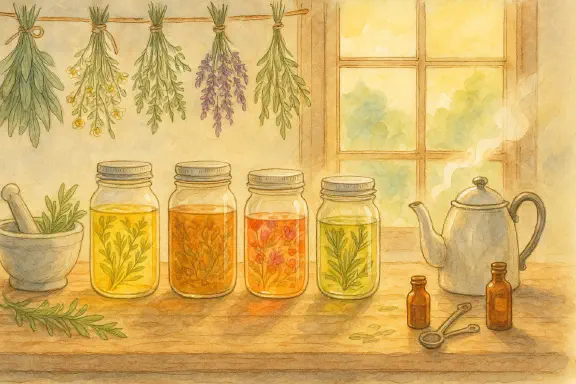
The Methods
Turn your homegrown herbs into teas, tinctures, salves, and more with our simple kitchen-based preparation guides. We’ll show you exactly how to make each one using equipment you already have—no fancy tools or complicated techniques required. Master the basic methods that will let you create dozens of different herbal preparations throughout the year.